The Architecture of Decay: 36 Years of 'Nail Clipping' in 'Rarh Bangla'

Updated: Mar 3
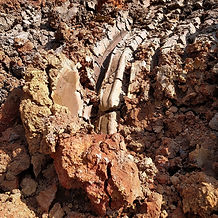
Most people come to a forest looking for life. At BABLI, we have spent the last 36 years looking at - and learning about - the poetry of decay....
In the dry, high-heat plains of Birbhum, the sun is a relentless force. It doesn’t just provide light; it incinerates!
For a tree in this "Lal Mati" (Red Laterite Soil) country, the sun acts as an external oven, baking the outer bark of trees into a brittle, suffocating "straitjacket."
In the lush, humid tropics, rain rots this bark away. But here in the Rarh, without that moisture, the bark becomes a "bark-bound" prison. The tree cannot shed its skin. It cannot breathe.
Then, the "Engineers" arrive...
The Myth of the Pest
To the urban mind, the termite is a destroyer. It is the creature that eats your library, your rafters, and your history. We know this pain well at BABLI — our books and documents have often served as an unwilling "tax" to these subterranean workers.
But in the wilderness, the termite is something else entirely: they are the Biological Nail Clipper.
The 'Nail Clipping' Service
Think of the thick, dry bark of an Arjun or a Sal tree as a fingernail. When it grows too long and brittle, it becomes a liability.
The termites sense this "Locked Carbon." Using their intricate mud-tube highways to stay moist against the Birbhum heat, they climb the trunks to perform a vital surgical service. They eat only the dead, dry outer bark — the "nails." They leave the living heart of the tree untouched.
By "clipping" these barks, they do what the absent rain cannot: they free the tree to expand, grow, and respire.
From 'Dead' to 'Stabilized'
The most profound result of this relationship isn't seen on the tree, but beneath your feet.
If that bark stayed on the trunk, the sun would eventually oxidize it into gas, disappearing into the atmosphere. Instead, the termites carry that carbon underground. Through the "bioreactor" of their guts, they convert "Dead" organic matter into Stabilized Humus.
After 36 years of allowing this cycle to continue—of never removing a single leaf or branch from our space—the results are undeniable:—
The Sponge Effect: In the areas under the shade where the termites are most active, the soil has transformed from red dust into a dark, moisture-holding reservoir.
The Temperature Shift: This humus-rich soil stays significantly cooler, protecting the "Alive" microbial engine of the farm.
The Lesson for the Producer
To the Urban 1% looking for a way back to the land: the lesson of the termite is the lesson of Reciprocity.
You cannot have a "clean" forest and a "fertile" soil at the same time. To build the "Fixed Deposit" of stabilized humus, you must accept the "Tax" of decay. You must learn to live with the engineers who do the work you cannot do yourself.
At BABLI, we don't fight the termites. We facilitate them.
Because after three decades, we’ve realized: they aren't eating our forest—they are building it.


Comments